
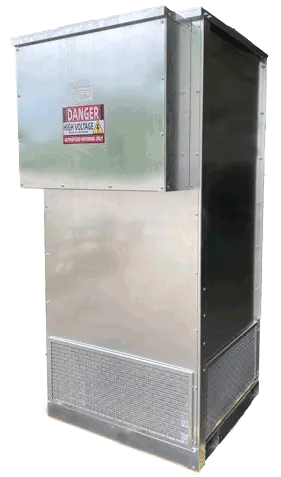


Bonitron Resistor Solutions aid in preventing AC drive overvoltage faults
Whether you're buying a reputable Bonitron Transistor or using your drives' internal brake, there's no need to go anywhere other than Bonitron - we're your one stop shop! Below is our selection of resistors rated up to the megawatts. Need a custom resistor? We do those too!
Browse Bonitron Resistor Solutions below:


Compare Bonitron's braking resistor series by voltage, peak current, and duty cycle to find the right fit for your drive.
| Series | System Voltage | Current (Peak) | Duty | UL & CUL Listed |
|---|---|---|---|---|
| Case Resistors | 230–480VAC | 10A | 10% | Yes |
| M3575R | 230–480VAC | 30A | 6–20% | Yes |
| M3775R | 230–690VAC | 1600A | 10–100% | — |
| M3775RPF | 460–600VAC | 1500A | 100% | — |
Need exact ohm/watt values for your application? Request a quote and our engineers will size a resistor to your drive.
Braking resistors most often fail from being undersized for the application — running beyond their rated duty cycle, absorbing more peak power than they're built for, or getting inadequate airflow for their cooling method. Matching the resistor's power rating and duty cycle to your drive's actual braking load is the best way to prevent early failure.
Sizing depends on your motor's horsepower, how quickly the load decelerates, the inertia being stopped, and how often braking occurs (duty cycle). The resistance value also needs to match what your drive's braking transistor is rated to switch. Because these factors interact, it's worth having an engineer confirm sizing rather than guessing — contact Bonitron for help.
The braking transistor switches excess DC bus voltage from the drive into the resistor; the resistor then dissipates that energy as heat. The two work as a pair — a transistor needs a resistor to be useful, which is why Bonitron also offers combo kits with both matched together.
 Brochure
 User Manual
 Request Info.